Condominium Law
OUR CREDENTIALS:
A construction error during the renovations to a underground parking lot left residents of the condo with a hefty bill and without access to their parking spaces for months. SVR’s Condo Team reached a settlement at mediation for $1.2M and recovered additional cost from the building’s insurer.
Scott Venturo Rudakoff LLP provides practical legal advice and exceptional client service for all condominium matters.
Our condominium lawyers can provide advice and recommend action on every legal aspect of condominium living. In particular, we can assist with:

We act on behalf of condominiums in the collection of outstanding fees, Special Assessments, chargebacks, fines, and insurance deductibles including:
Preparation, registration and discontinuance of caveats
Demand Letters
Foreclosure actions in Court of Queen’s Bench
Legal actions to collect fines and chargebacks that cannot be collected by foreclosure
Condominium bylaws are the rules governing obligations of a Condominium Corporation, its Board of Directors, and its owners. We can act on behalf of Boards in situations involving unit owners breaching Bylaws such noise violations, and age restrictions by providing:
An opinion on whether there has been a breach or not
Demand letters to owners requiring they “cease and desist” from breaching Bylaws
Court applications compelling owners to abide by the Bylaws and charging any costs for remediation back to the owner.
We represent Condominium Corporations and their Board of Directors in claims dealing with all types of construction and warranty losses through various negotiation and litigation techniques. Our approach has resulted in a 100% success rate at reaching a settlement outside of Court.
We can assist you by chairing Annual General Meetings and/or Special General Meetings where legal issues are on the agenda or if the Board is not comfortable managing the meetings.
Every year, we assist dozens of Condominium Corporations and their Board of Directors in interpreting, drafting, and amending bylaws. Updating bylaws to reflect the new provincial Condominium Property Act, policies on short-term rentals, the use of cannabis in the building and addressing insurance implications of betterment & improvements are among the issues that we frequently assist with. We also prepare special resolutions necessary for approving new bylaws, and their registration at the Land Titles Office.
We can assist Condominium Corporations and their Board of Directors in evaluating tenants’ and owners’ actions, leading ultimately to court applications for the eviction of pets, tenants, and even owners who are breaching Bylaws.
Condominium boards are frequently asked by unit owners for approval to modify common area of the building. These changes can include items such new skylights, decks, privacy shades, BBQs and solar tubes. While boards are often happy to support these changes which add to the owners enjoyment of their home, they need to be careful that these agreements are drafted in a way that establishes who will be responsible for these new elements of the common area. Steps to take include registering an easement on the title of the unit owners’ property so that any future owner of the unit knows from the outset what they are responsible for.
Condominium Law Team
Condo Law Updates
SVR Lawyers is pleased to congratulate five of our lawyers who have been recognized in the latest edition of The Best Lawyers in Canada across a range of practice areas.
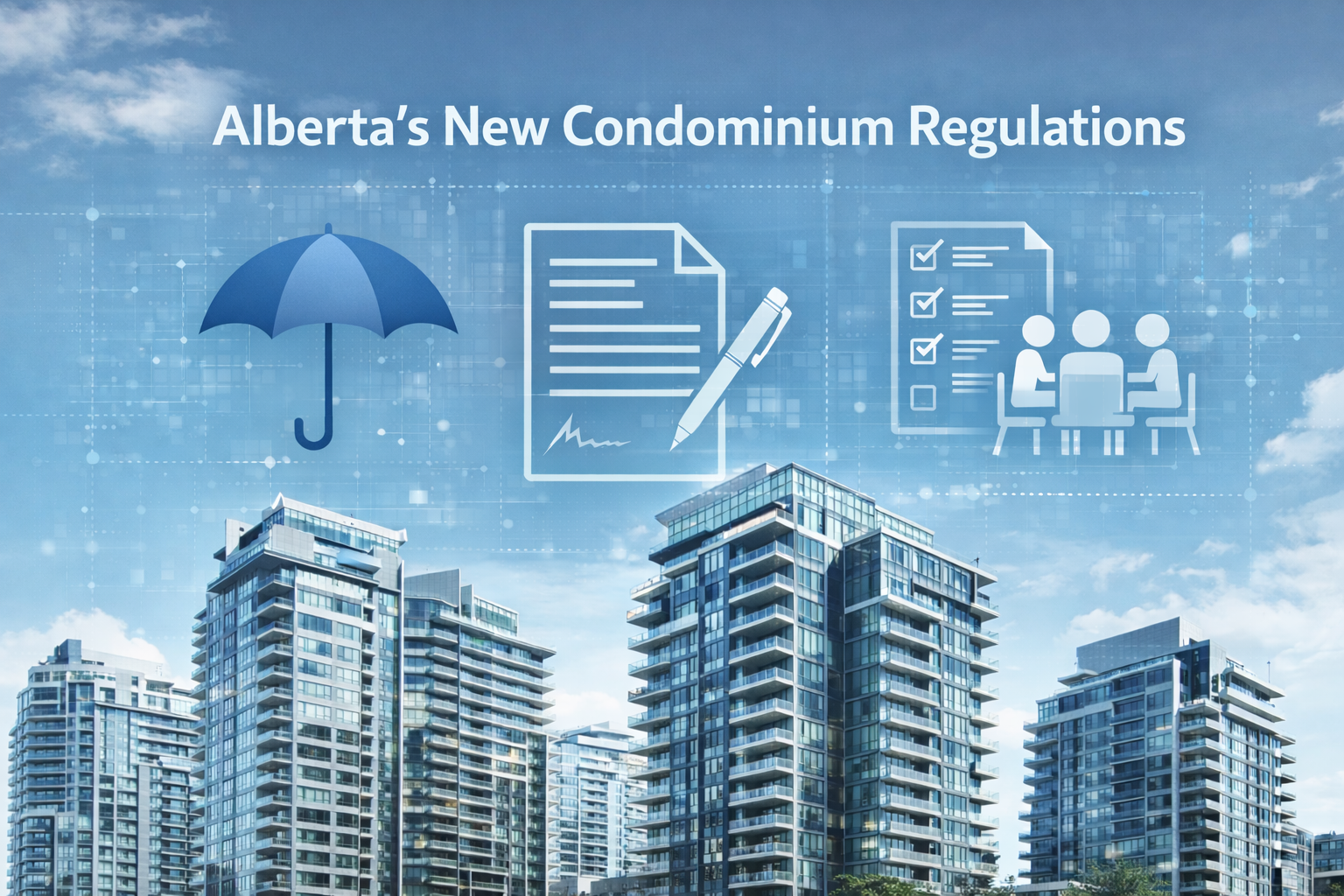
Most New Condominium Regulations provisions of Alberta’s Bill 30 came into force on February 15, 2026.


SVR successfully represented a condominium corporation in a bylaw and condominium fee claim brought by an owner and developer.


This case adds to the jurisprudence surrounding rule 4.33 drop dead applications, making clearer what, and what does not, constitute a significant advance.

Defamation is a growing issue in condo communities. This article explores how defamation occurs and offers practical advice on prevention and resolution to maintain a respectful community.

As of August 1, 2023, major changes regarding action limits and costs in the Alberta Court of Justice will take effect. Most notably, the limit for small claims has increased from $50,000 to $100,000.

The case of Engel v Glenora Manor illustrates the risks Condominium Corporations take when they fail to adequately address owner concerns, especially in the realm of Human Rights.

On March 27, 2023, new amendments to the Prohibition on the Purchase of Residential Property by Non-Canadians Regulation came into force.

On January 1, 2023, new federal legislation came into force that will have a significant impact on non-Canadians purchasing property in Canada.

The Alberta Court of King’s Bench rules on collecting condo fees on a caveat that was filed more than two years prior to a foreclosure action filed to collect those fees.

An Alberta Human Rights Commission decision confirmed the Human Rights Act and the Condominium Property Act obligations on condominium corporations, including their duty to accommodate.

Download the slides from Kate Kozowyk’s presentation to the Alberta Condominium & Real Estate Conference in September, 2022.

In Gill v Wawanesa Mutual Insurance Company, 2022 BCSC 981, the perimeter drainage system of a house became clogged.

Two recent cases emerging from Alberta and Manitoba have brought attention to the legal implications of smart camera and doorbell use in condominiums.

In a surprise announcement, the government of Alberta has confirmed that the establishment of a tribunal to address condominium-related disputes will not proceed at this time.

As of January 11, 2022 amendments to the Calgary Vaccine Passport Bylaw have come into effect which modify the scope of eligible businesses, including condominium amenity facilities.

An Ontario Tribunal provides a caution to condominium corporations if they are providing incomplete or redacted meeting minutes to an owner upon request.


Condominium Corporations, Residents Associations and Home Owner’s Associations in Alberta now have the option to hold AGMs online, as opposed to in person.
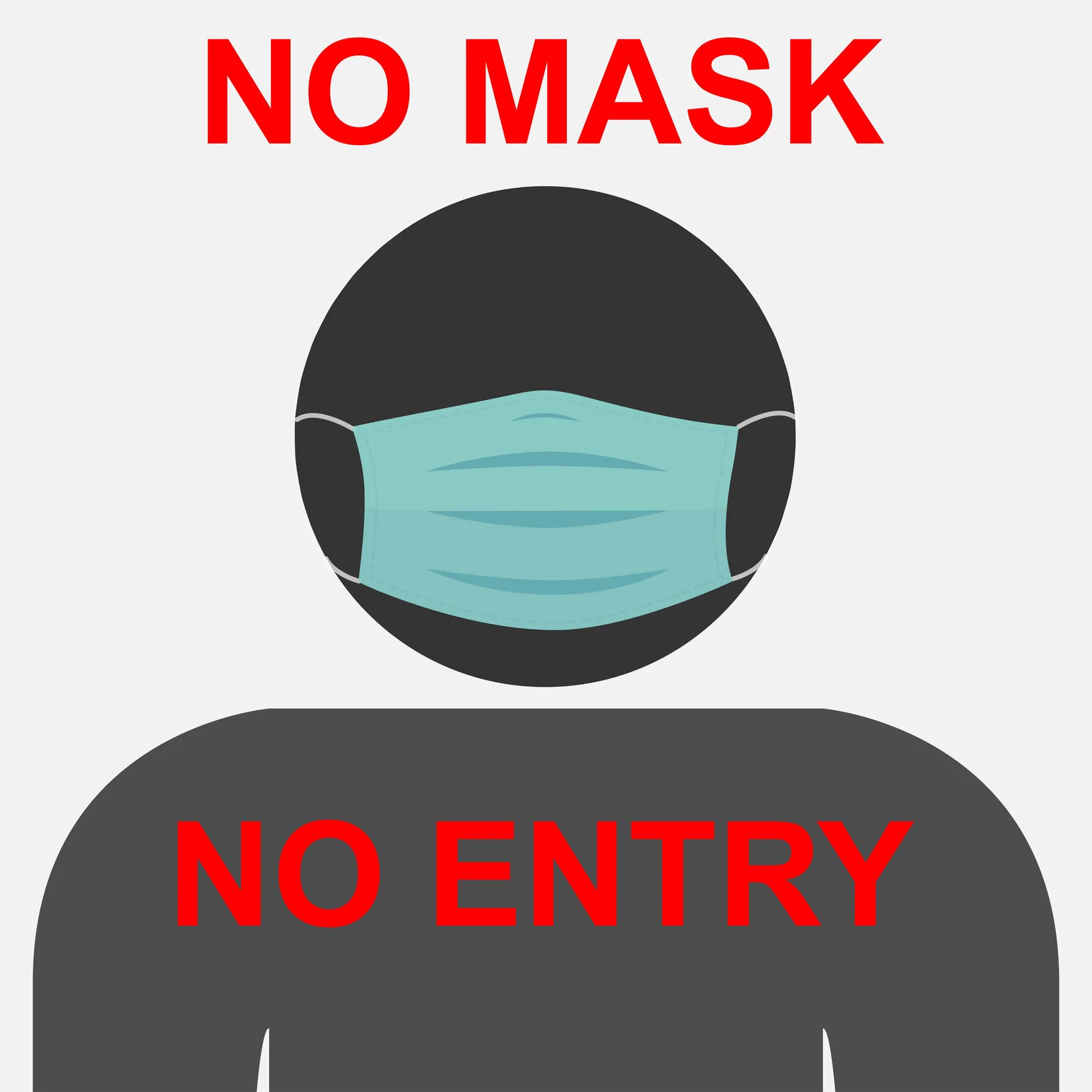
In the Ontario case of Halton Condominium Corp No 77 v Mitrovic, the Ontario Superior Court granted a permanent injunction prohibiting the Mitrovics from frequenting some common areas of their condo building unless they were wearing face masks.

The Prompt Payment and Construction Lien Act prescribes timelines and mandatory rules for payments and liens in all construction industry sectors, including Condominiums, to ensure contractors and subcontractors are paid promptly.

A new Ontario case has upheld that a condominium owner’s failure to maintain a toilet that had a slow leak constituted an act or omission.

Because of COVID-19, condominiums appear to be operating in a grey area where they will soon be required to hold AGMs, but the method by which they are to do so is uncertain.

Kunzler v The Owners, Strata Plan EPS 1433, 2020 BCSC 576 (“Kunzler”) is an notable recent case from British Columbia which addresses the ability of a strata corporation to pass bylaws preventing or regulating certain types of businesses and activities on its grounds.

On June 3, 2020, major changes were announced to the Real Estate Act, the legislation that governs realtors, mortgage brokers, appraisers, and property managers in Alberta.

The COVID-19 crisis is an unprecedented situation and will require condominiums to consider new and different measures to ensure the financial security of the condominium is to be maintained, while simultaneously accounting for the needs of their owners.

We are closely monitoring new developments and adhering to the recommendations of public health authorities.

In a written decision published February 27, 2020, Justice Belzil confirmed that Condominium Bylaws, if properly drafted, can prohibit short-term rentals.